


“How I Plan & Cue My Classes” An insight into Aoife’s Approach As A Pilates Instructor
13 Mar 2026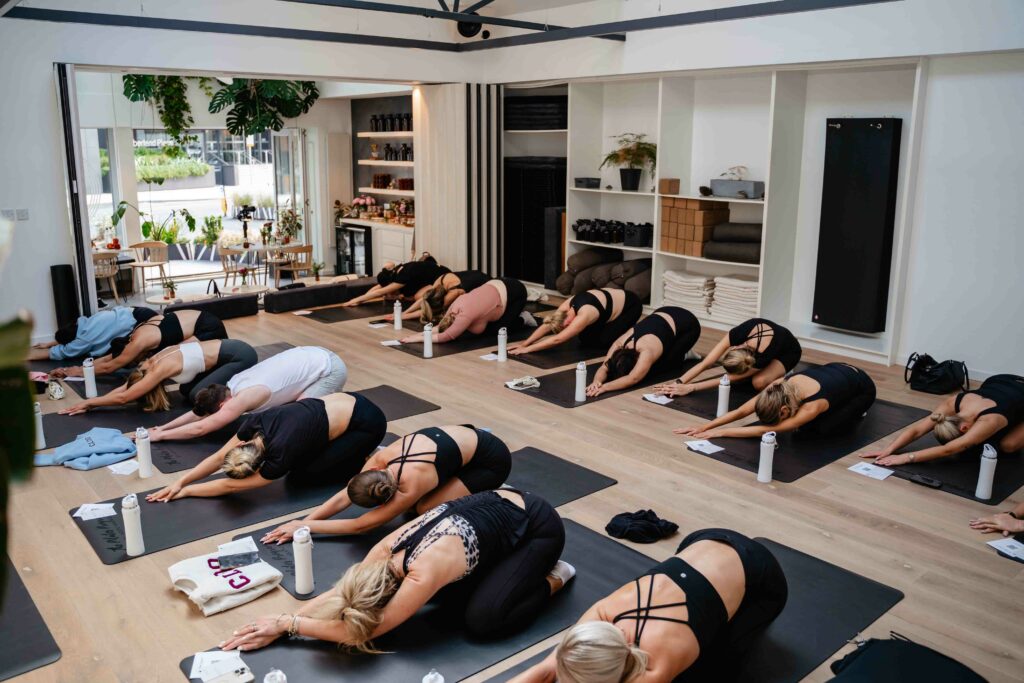
So, this is very much an “opinion piece” that I am so excited to share with you. I am going to chat through different aspects of teaching including planning a class, positional changes and flow, building a sequence with layers, cueing an exercise and the importance of creativity and flexibility. I hope to finish with some tangible tips that instructors can take away and apply to their own teaching.
From the DM’s and email’s I receive, I know that so many of our members and followers are also Pilates instructors. So I thought this might be an interesting read for lots of our community. This is also a topic that I as an instructor like to hear about so I thought some of you might feel the same. Or, maybe our members might even find it interesting to hear about their instructors approach and to understand why 10 reps often is 15! Certain things that I do when teaching might make sense to you when I explain my rationale!
I’ll be honest though, how I plan classes and deliver cues isn’t something I think about. I just have developed a way of doing it and it feels like it happens automatically. I think as instructors, that’s probably a good sign and what we should strive for; it should happen naturally once we settle into teaching.
This wasn’t always the case for me though, when I first started teaching I used to write everything out. Things didn’t happen as “automatically” and I know that I struggled to bring my personality to the teaching in any way. I simply could not deviate from the class plan I had set out with. But, I think with time you relax into teaching as you get more confident. So for anyone starting out on their teaching journey, give yourself lots of time to practice and it will all become more effortless.
Planning A Class
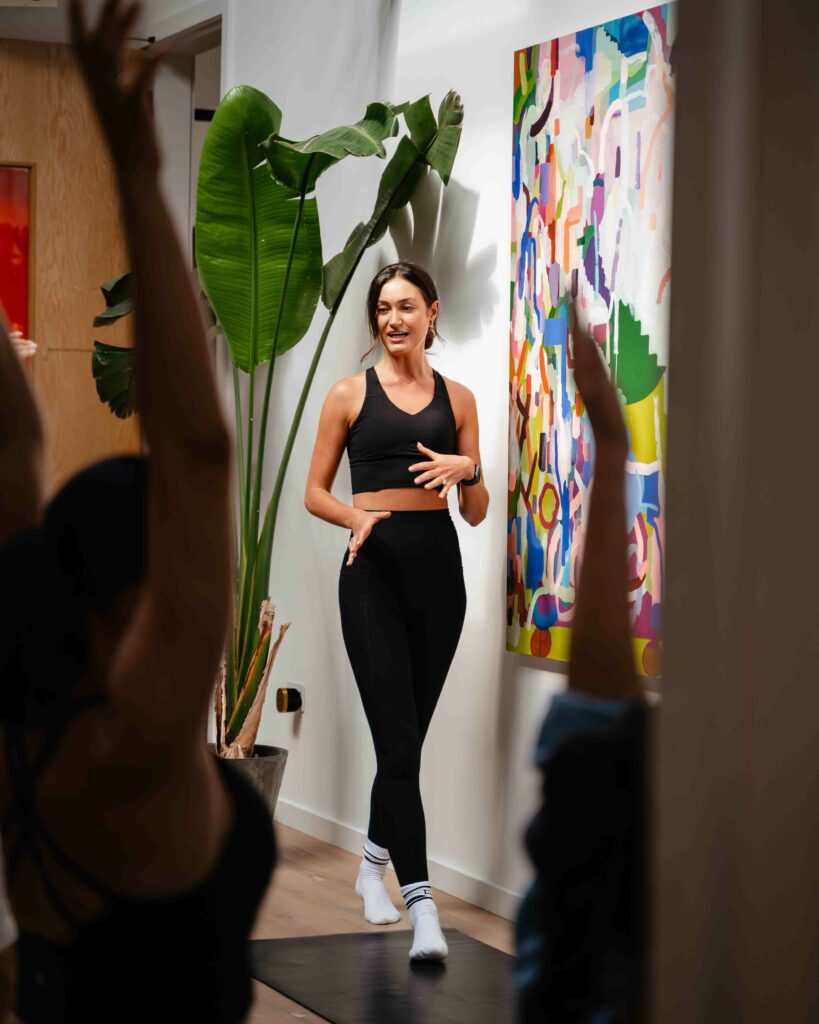
Ok, so this is where I start when it comes to planning a class. I first decide the length, the level and the focus. So for example it could be a 30-minute, full body Pilates flow that’s suitable for beginners. Or it could be a 15-minute, intermediate-advanced core class. I always start here with this outline. Then I really broadly decide what sequences I want to include. So let’s use the 15-minute, intermediate-advanced core class as an example. I might decide that I’ll include a sequence on our back, then in sitting and finish in all 4’s. This decision comes from what moves and sequences I’m enjoying at that time and what I feel like including. Here I have decided on 3 sequences in different positions, but if I’m planning a longer class, I would include more (adding a side lying or a kneeling sequence for example) or for an even shorter class I would include less.
Positional Changes & Flow
So, we have broadly decided on the class, now we need to get into the details of it. Before we do, we want to make sure that we minimise our positional changes. We don’t want to do a standing sequence, then move down to side lying and then back up to standing. The class simply won’t flow well. So, once you have decided on the sequences, look at the order and make sure one will flow into the next. This could look like beginning in standing, moving to all 4’s (a standing roll down is a nice way to manage this transition), then over onto side lying, up to kneeling and then to side lying on the other side before finishing on your back. Now, don’t get me wrong, in a longer class (40-50 minutes in particular) it can sometimes be nice to up and change position completely to mix things up, but I feel this really has a time and a place. So I’ll finish here with this; be conscious of flow and ensure one sequence flows into the next.
I broadly pick a “starting exercise” in each position and then I build on it. It could be all 4’s, a bridge or a lunge for example. I will then add layers to it (more on layers below). So in terms of my class plan I now know the length, level and focus, I have decided on the positions and the starting exercise in each.
Another thing to consider is a “transitional movement” like a roll down or a roll up to go from one sequence to the next. I think that adds something really nice and makes the class feel like it was well thought out.
Building A Sequence By Adding Layers
Ok, this is my favourite thing to do in class; adding layers to exercises, especially in a sculpt style class. This is how you feel that amazing Pilates burn! This may not be quite as relevant in a more gentle or beginner class as you will be focusing on form and technique rather than it being really challenging.
Exercises don’t always have to be really challenging, you just need to build on the basics by adding layers and reps and you will really feel it. So, let’s use an all 4’s sequence here as an example. We might begin in all 4’s and start working one leg. So, start with whatever is the most basic movement here. Maybe it’s just extending your leg back into the air and holding it. Next, add pulses, then maybe you add knee to chest and extend it back out. You might add a pulse in each time you extend the leg back. You might then finish with 10 more pulses and then a hold. You could add even more layers here depending on how it’s feeling. For an even more challenging class you could begin working in a push up or a plank. It’s all about being really creative here.
Cueing An Exercise
Ok, is there anything more challenging as an instructor than trying to instruct what an exercise is, cue form, correct form (if its in-person), count reps and encourage at the same time? Multitasking is at an all time high! If you struggle with this initially, it gets easier, I promise.
A side note to this; your ability to memorise classes and sequences will also get easier. I sometimes can’t remember what day it is, but I won’t miss a single move in a whole 20-minute sequence when I go to repeat it on the other side – I can’t make sense of it!
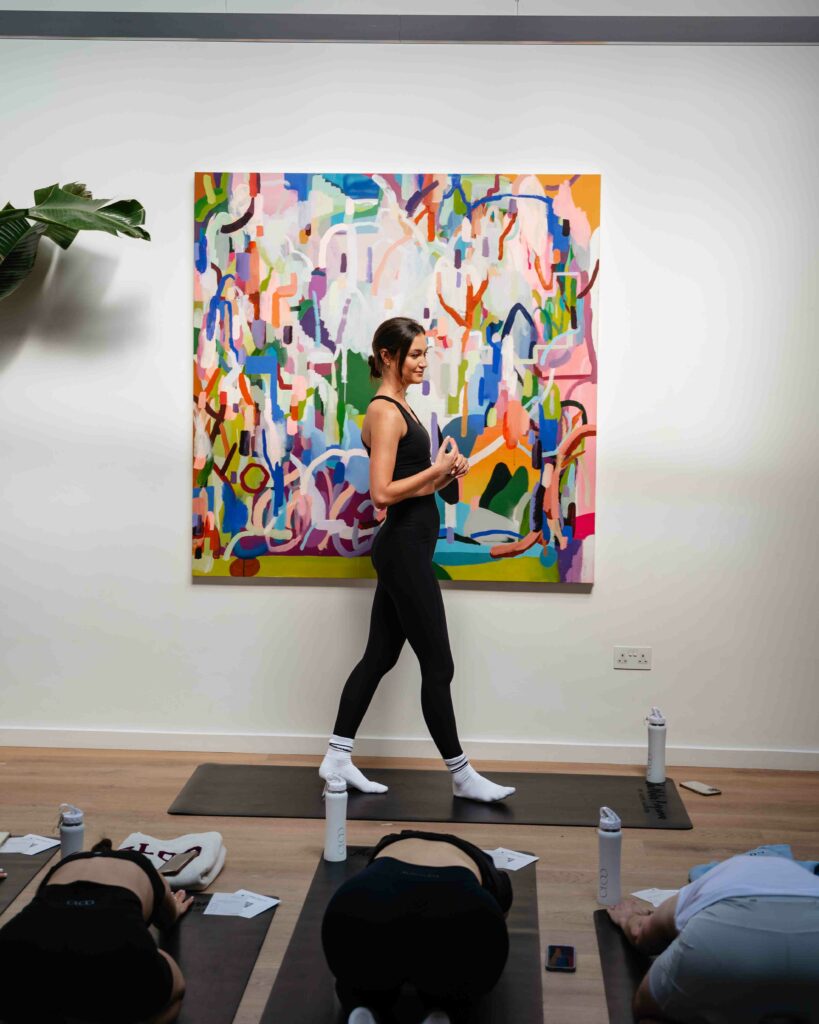
So, here’s my approach to cueing. First I’ll say what the exercise is. Let’s use a lunge as an example. So, I’ll begin by saying “ok we are going to move into a lunge sequence” and I’ll cue the start position. Cue as concisely as possible so people can get started. I really feel that people don’t like standing and waiting to begin while the instructor is talking a lot.
Then, once we are moving, I like to go into cueing form and correct alignment in the lunge. First I start with cues to help them do the lunge correctly and then think about our Pilates principles; breath, posture and engaging the core. Usually by the time I have this done, we will have close to 10 reps completed, so I’ll start adding layers.
When I’m adding layers, I’m usually counting reps. I tend to add on a layer, do a couple of reps and then start counting from 10. So, you’ll often do 12-14 reps in my classes! I do this because some people take a second or two to get into the move; they can often miss out on the first couple of reps anyway, so I feel a sweet spot to ensure that everyone does 10, is really doing 12-14. It’s not that 10 reps is really important for results or anything, I actually just feel the timing of it works. It’s long enough to settle into a move but not so long that you get bored. Again, this is a personal preference.
I’ll also start encouraging people as they start to feel it and get tired. In an in-person class, you’ll see it in peoples faces. When filming online, I try to judge this on how I’m feeling it myself. Depending on how many different layers I’m adding, I’ll sometimes cue form and correct alignment again as I am counting reps (form always suffers as we begin to tire and feel the burn). Finally, I will tee up the next exercise to give people an idea of what’s coming. I think this is a nice thing to do if you can.
In a more challenging sculpt style class, all this happens quite quickly. But, in a beginner level class it’s much slower. Your cueing and the pace of your cueing should reflect the level that you are teaching to, I think it’s important to bear that in mind. It’s not a one size fits all here.
Being Creative & Flexible
Creativity is so important as a Pilates instructor. Making classes yours and developing a style that’s unique to you is what will set you apart from everyone else. Let’s acknowledge that we aren’t reinventing the wheel, but we still need to be able to create sequences that aren’t a copy and paste of someone else’s. You won’t always feel creative, but doing other peoples classes both in-person and online is a good way to get inspired. I also find that taking time to flow on the mat myself and seeing what comes to me is a good way to come up with new sequences.
That said, it’s important to find a balance between letting your creative juices flow but also not losing the run of yourself. If you overcomplicate things, people can struggle to follow or to enjoy the class. I think it’s also important to note that you typically are more creative the more advanced the class is. If I’m teaching a back specific or a beginner class, I’m focusing on the basics. My creativity is in my cueing, rather than the exercises.
Being flexible in a class is also something that comes with experience. Something may not work out exactly the way you planned and you need to be able to think on your feet and pivot. But with experience, you will be more relaxed and this will allow you to think clearly and deviate from the plan when you need to.
Wrapping Up
Writing this blog and reflecting on my own teaching made me realise how “on” you have to be while instructing a class. It makes sense to me now why I come home from filming and can barely hold a conversation with my husband. Your brain is in OVERDRIVE!
It takes time to get comfortable and confident in your own ability, but it comes. The more you practice, the better. You’ll also begin to enjoy teaching more when you settle into it. I used to be so anxious teaching classes at the beginning. Still to this day, the toughest class I ever thought was the very first one. Now that I’m more confident, I am more relaxed and I truly love it. It doesn’t mean I find it easy, I’m still wrecked after a day of filming classes, but despite that, I’m on a high. So, if you are on a teaching journey, don’t he hard on yourself, you will get there and I wish you all the best.
I’m going to leave you with a summary of the points that I think might be the most helpful to take away from this post below.
- Teaching is hard initially. Give yourself lots of time to practice and it will become more intuitive. Find ways to make it easier for you. For example; write out your class plan and have it beside you if you need to.
- When planning with a class, start with the length, level and focus.
- Keep positional changes to a minimum and consider a transitional move between sequences to make the class feel well thought out.
- Consider adding layers to simple exercises. This keeps the flow and also allows you to feel the burn. Be creative with how you do it, while also being mindful of the level you are teaching to.
- Keep your cueing concise. Consider things like form, technique, reps, encouragement and teeing up the next exercise or sequence.
- Be creative, but don’t overcomplicate things. It’s a fine balance.
- Get comfortable with being flexible and having to pivot mid class. Our class plans don’t always go to plan (no pun intended)!
- Finally, if you love Pilates, have confidence in your ability as an instructor. I truly believe that the most talented instructors are the most passionate.